Download Book
Arabic ar
كتب المؤتمرات والفعاليات
1430 AH - 2009 CE
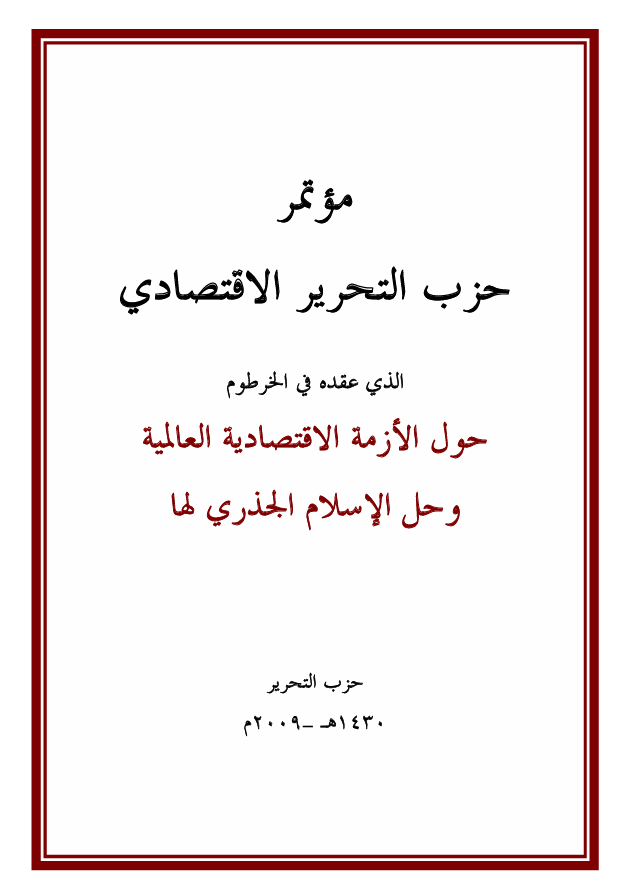
Hizb ut-Tahrir Economic Conference in Sudan (2009)
Hizb ut Tahrir
A book about the Hizb ut-Tahrir Economic Conference in Sudan in 2009, discussing the capitalist system and its failure to achieve a stable life, and calling for the application of Islamic rulings as an alternative system.
مقدمة / Introduction
Hizb ut-Tahrir, in its endeavor to revive the Islamic Ummah with its ideology, and then bring the misguided world out of the darkness of unjust capitalism into the light of Islam and its justice, had to show the people, all the people, that Islam is capable with its rulings that came from the Lord of the Worlds, the Creator of all mankind, to create a safe and stable system in which there are no crises, after the capitalist system failed to create a comfortable and reassuring life for the countries that carry it and embrace its creed, or that apply it without embracing its creed.Table of Contents
1.
- Introduction
2.
- Foreword
3.
- Conference Promotion and Announcement
4.
- Economic Conference Program
5.
- Opening and First Session
6.
1- Speech of the Leader of Hizb ut-Tahrir, Ata bin Khalil Abu Rashta, may God protect him
7.
2- Capitalism Carries Its Failure Within Itself As It Generates Crises
8.
- Introduction
9.
- The Foundations on Which the Capitalist Economic System Is Based:
10.
1/ The Doctrine of Principle: Separating Religion from Life "Moderation"
11.
2/ Focusing on Developing Wealth Without Distributing It
12.
3/ Releasing Ownerships
13.
4/ The Banking System and Banks
14.
5/ Capitalist Companies and the Manufacture of Poverty
15.
- Tools for Applying the Capitalist Economic System:
16.
1/ Mandatory Paper Money
17.
2/ International Institutions
18.
3/ Market Policies - Privatization - Globalization
19.
4/ Stock Exchanges (Parasitic Economy)
20.
- Conclusion
21.
3- The Emergence of the Current Economic Crisis; Reasons and Causes
22.
- General Causes of the Crisis
23.
- Indirect Special Causes
24.
1/ Trade Deficit
25.
2/ Indebtedness
26.
3/ Removing Restrictions on Financial Institutions
27.
- Direct Special Causes
28.
1/ The Problem of Credit and Mortgage
29.
2/ The Problem of Speculation in Financial Markets
30.
4- The Impact of Capitalist Crises on the Economies of Indonesia
31.
- Neocolonialism in Indonesia
32.
5- The Impact of the Global Economic Crisis on the Economy of Bangladesh and Pakistan
33.
- The Reality of the Global Financial Crisis
34.
1/ Economic Policies
35.
2/ Banking Laws and Procedures
36.
3/ Weak Government Interaction
37.
4/ Borrower Behavior and Identifying the Factors of the Crisis
38.
- The Economic Conditions of Bangladesh and Pakistan
39.
- The Size of the Trade Shock
40.
- Are Pakistan and Bangladesh Immune to the Global Financial Crisis?
41.
- Effects of the Global Economic Recession
42.
1/ Impact of the Financial Sector
43.
2/ Effects of the Real Economy Sector
44.
* Export
45.
* Import
46.
* Remittances
47.
* Investment
48.
- Conclusion
49.
• Interventions and Comments of the Attendees on the First Session
50.
The Second Session
51.
1- The Impact of the Global Financial Crisis on the Situation in Turkey
52.
- The Impact of the Crisis on the Financing Sector
53.
1/ The Banking Sector
54.
2/ Investment Portfolio
55.
3/ The Stock Exchange
56.
- The Impact of the Crisis on the Real Sector
57.
- The Sectors Most Affected Within the Real Sector in Turkey
58.
1/ Vehicle Manufacturing Sector
59.
2/ Textile Industry Sector
60.
3/ Construction Sector
61.
- The Impact of the Global Crisis on Small and Medium-Sized Enterprises
62.
- The Impact of the Crisis on Individuals
63.
- Alleged Projects and Measures that the Government Intends to Take to Face the Crisis
64.
1/ Warehouse Safety Project
65.
2/ Hedging Package
66.
3/ Possibility of Signing a Support Agreement with the International Monetary Fund
67.
4/ Gulf Capital
68.
- The Healing Treatment for Economic and Financial Crises
69.
2- The Impact of the Global Financial Crisis on Arab Countries
70.
- First: The Negative Effects of the Crisis on Arab Countries:
71.
1/ Decline in Oil Prices
72.
* Deficit in the Budgets of Oil-Exporting Countries in the 2009 Budget
73.
* A Sharp Shortage of Liquidity and a Decline in the Implementation of Development Plans
74.
* Increases in Taxes, Customs and State "Usurious" Loans
75.
2/ Decline in Financial Transfers (Arab-Arab - Foreign-Arab)
76.
3/ Decline in the Volume of Exports in Quantity and Value
77.
4/ Losses of Arab Investments in the West
78.
5/ Losses of Arab Stock Exchanges and Financial Markets
79.
6/ Decline in Arab and Foreign Investments in the Arab Region
80.
7/ Decrease in Aid Provided by Donor Countries
81.
8/ Increased Rates of Unemployment, Poverty and Crime
82.
9/ Brain Drain
83.
10/ Increased Rates of Celibacy and Divorce
84.
Second: The Positive Effects of the Crisis on Arab Countries
85.
- Do the Ruling Regimes Provide Some Protection for the Local Economy?
86.
- Available Capabilities
87.
1/ Intellectual Link
88.
2/ Human Power
89.
3/ Energy and Raw Materials
90.
4/ Capital
91.
5/ Geographical Location
92.
- Obstacles
93.
First: Lack of Political and Economic Independence
94.
Second: Public Corruption
95.
Third: Lack of Security
96.
3- The Economic, Social, and Principled Effects of the Economic Crisis in Europe
97.
- Interventions and Comments of the Attendees on the Second Session
98.
The Third and Final Session
99.
1- The Effects of the Financial Crisis in Morocco
100.
- The Economic Impact
101.
- Political Repercussions Resulting from the Crisis
102.
- The Ideological Impact of the Crisis
103.
2- The Failure of Current Treatments for the Financial Crisis
104.
- The Process of Injecting Funds
105.
- Reducing the Interest Rate
106.
- Buying Distressed Assets
107.
- Recapitalizing Banks and Companies
108.
3- The Islamic Political System in the Caliphate State Alone Is Capable of Providing a Just Economic Life Free of Crises
109.
- First: The Policy of Economics in Islam
110.
- Second: Islam's View of Money
111.
- Third: Islam's View of Currency
112.
- Fourth: The Severe Prohibition of Usury
113.
- Fifth: The Distribution of Wealth and its Ownership in Islam
114.
- Sixth: Stock Exchanges and Islam's Position on Them
115.
- Seventh: Economic Welfare Undertaken by the State
116.
- Eighth: Holding State Employees Accountable for What They Possessed Illegally
117.
- Ninth: Monitoring the Economic System in Islam
118.
• The Press Conference Held by Hizb ut-Tahrir Media Personnel
119.
• The Final Statement of the Conference
120.
• Questions from Journalists and Media Professionals to Hizb ut-Tahrir Representatives at the Press Conference
121.
• Comments and Reactions of Some Members of the Nation to the Conference
122.
• Conference Announcements and Invitation to It
123.
• Pictures of the Conference
124.
• Conclusion
خاتمة / Conclusion
Finally, those who attended the conference, followed it via the Internet, or read the papers presented in it, concluded that there is no salvation for humanity from this misery it is experiencing except by applying the systems of Islam in the economy, the state, the social system, and other systems emanating from the great principle of Islam under the state of Islam (the Rightly Guided Caliphate) which everyone must work to expedite its establishment so that justice prevails and injustice is eliminated by the rulings of Allah, the Subtle, the Knowing.
شارك الكتاب:
كتب ذات صلة
عرض المزيد
Hizb ut Tahrir: Global Events of Hizb ut Tahrir for the Centenary of the Destruction of the Khilafah 1442 AH – 2021 CE
Speeches from the Final Conference for the Centenary of the Khilafah Destruction (2021)