كتب غير متبناة
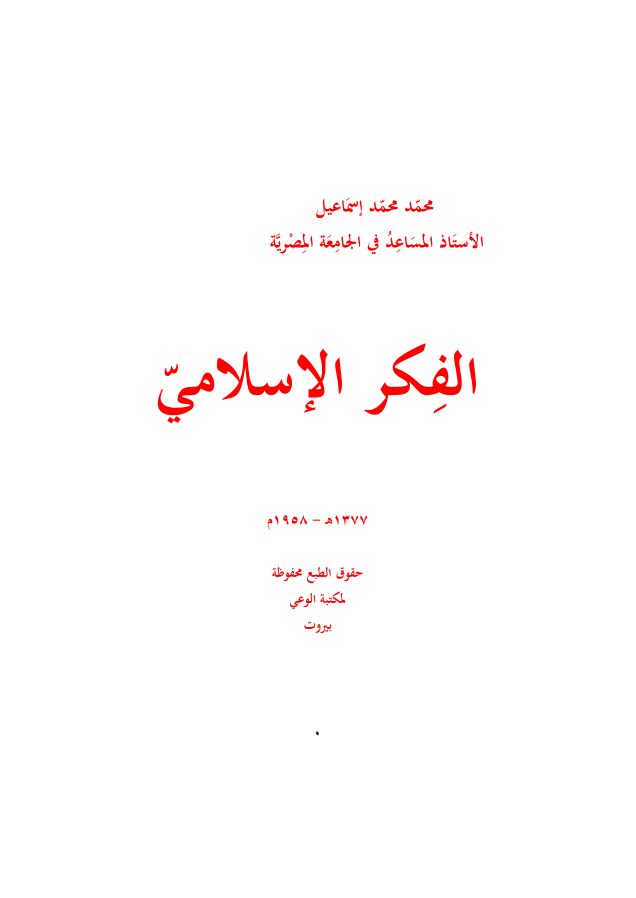
1377 AH - 1958 CE
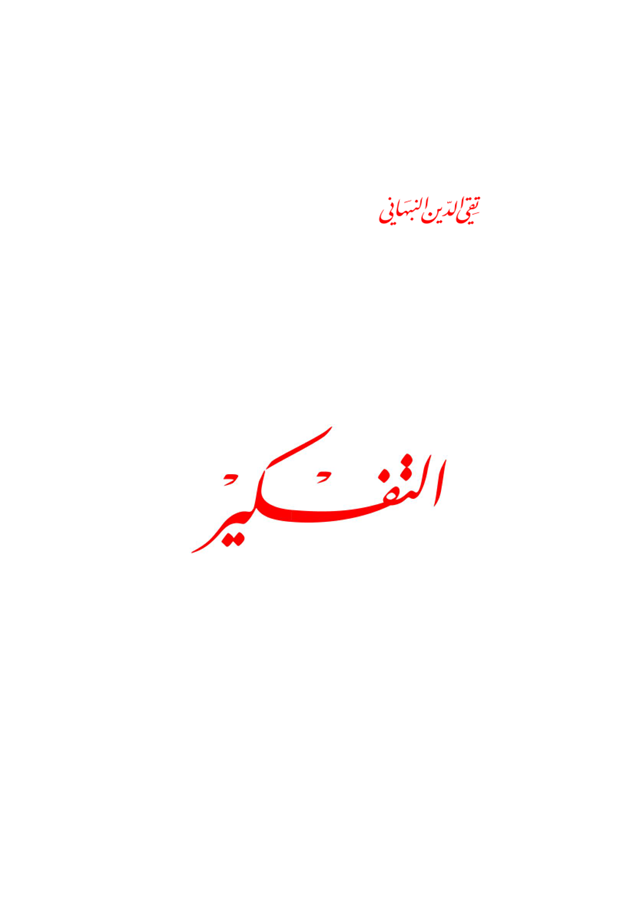
Islamic Thought
Taqiuddin an-Nabhani
Acquiring Islamic culture is an obligation upon Muslims, whether through studying religious texts or using tools that enable understanding and applying these texts. There is no difference between acquiring knowledge of Sharia rulings or Islamic ideas. However, it is painful that since the West invaded Islamic lands with its culture and civilization, and imposed its rules, concepts, and authority, Muslims have turned away from Islamic culture as a result of the decline of Islamic power and a deviation in sound taste due to misleading campaigns waged against Islam and its culture.
I felt compelled to publish something of this Islamic culture, hoping that people, both Muslims and non-Muslims, would find in it something to enlighten their minds, correct their tastes, and address some of the intellectual decline that looms over this region.
I ask Allah to grant Muslims success in fulfilling what He has obligated upon them in acquiring Islamic knowledge, carrying its message, and spreading its culture. Indeed, He is All-Hearing and Responsive.
مقدمة / Introduction
Islam is a unique style of life, distinct from all others. It imposes upon Muslims a way of life colored with a fixed and unchanging hue, and necessitates adherence to this particular style to the extent that they find intellectual and psychological peace only in this specific kind of living, and feel happiness only within it. Islam came as a set of concepts about life, forming a specific point of view. It came in broad outlines, meaning general meanings that address all of humanity's problems in life, from which a solution to every problem that arises for humanity can be derived. All of this is based on an intellectual foundation under which all ideas about life fall, and which is taken as a measure upon which every sub-idea is built. It also made rulings, including treatments, ideas, and opinions, emanating from the creed, derived from the broad outlines. So, it defined ideas for humanity, but did not limit their minds but rather released them. It restricted their behavior in life with certain ideas, but did not restrict humans but rather released them.Table of Contents
1.
Table of Contents. 3
2.
Introduction 6
3.
Islam is a Specific Way of Life.. 7
4.
Allah is a Tangible Reality, Not an Imaginary Idea in Minds. 9
5.
The Principle 12
6.
The Measure of Deeds. 15
7.
Religiosity is an Instinct 17
8.
A Collective Obligation is an Obligation on Every Muslim 19
9.
La ilaha illa Allah means: There is no deity except Allah.. 21
10.
Sustenance is in the Hand of Allah Alone 26
11.
Adherence to Sharia Rulings is Necessitated by Belief in Islam 29
12.
Death Only Occurs Upon the Expiration of the Term. 31
13.
Jihad is an Obligation on All Muslims. 34
14.
The Five Rulings 37
15.
The Opinion Extracted by the Mujtahid is a Sharia Ruling. 41
16.
The Default in Actions is Adherence to the Rulings of Sharia. 44
17.
It is Not Permissibility nor Prohibition. 44
18.
The Default in Things is Permissibility 48
19.
It is Not Permissible for Rulings to Change with the Change of Time and Place. 52
20.
The Command and the Imperative Verb Form 54
21.
Wherever the Sharia is, There is Benefit 57
22.
The Rulings of Worship are Authoritative from Allah.. 59
23.
Thought 62
24.
The Method of Thinking. 66
25.
The Unseen Predestination 69
26.
Islamic Concepts are Controls for Human Behavior in Life 72
27.
Punishments in Islam 74
28.
Instinctive Discrimination. 79
29.
Fear.. 82
30.
Reality and Concept is What Arouses Instincts 85
31.
Islam is Concepts for Life and Not Just Information.. 88
32.
Personality 91
33.
The Islamic Personality 95
34.
Supplication in Islam 98
35.
The Meaning of Sanctification.. 101
36.
The Infallibility of the Messenger. 104
37.
It is Not Permissible for the Messenger to be a Mujtahid 108
38.
Psychology, Sociology, and Education 113
39.
The Scientific Method and the Rational Method 120
40.
Political Awareness. 125
41.
Spiritual Power is the Most Influential of Powers 131
42.
The Intellectual Style and the Literary Style. 135
خاتمة / Conclusion
Hence, you find the intellectual style prevalent in the nation when it is in a state of renaissance and the vigor of its ascending path, while the literary style prevails in the nation when it is superficial in its thinking or in a state of luxury. Therefore, we find that the era in which Prophet Muhammad, peace and blessings be upon him, was sent, poetry weakened and literary prose decreased, and the intellectual style became widespread in speeches and hadiths. The Holy Quran was the most wonderful example of the intellectual style and most of it was of this style, even though it contained the most wonderful aspects of the literary style, but it adheres to what is adhered to in the intellectual style in terms of accuracy and precision. The Islamic nation in this era has experienced the feelings of revival, so it is in need of the intellectual style to convey the truths to people and make their feelings aroused for working with them permanent, even though we cannot do without the literary style in urging people to work, but after placing the thought that we want them to work with in their minds and focusing their belief in it.
شارك الكتاب: