طاعة الله كما يحبّ لا كما نحبّ!

شهادة أن لا إله إلّا الله وأنّ محمّدا رسول الله معناها أن نعبد الله وحده لا شريك له؛ ننفّذ أوامره وإن خالفت هوانا ونبتعد عن نواهيه وإن وافقت مرادنا. منهج أرسى عليه e  دعوته وجعل حبّ الله وحبّ رسوله في أعلى المراتب لا يضاهيهما حبّ النّفس ولا الولد ولا المال. وقد حذّر الله سبحانه وتعالى المسلمين من أن يكون لهم شيء أحبّ لهم من الله ورسوله والجهاد في سبيل الله

0:00 0:00
Speed:
June 18, 2019

طاعة الله كما يحبّ لا كما نحبّ!

طاعة الله كما يحبّ لا كما نحبّ!

شهادة أن لا إله إلّا الله وأنّ محمّدا رسول الله معناها أن نعبد الله وحده لا شريك له؛ ننفّذ أوامره وإن خالفت هوانا ونبتعد عن نواهيه وإن وافقت مرادنا. منهج أرسى عليه e دعوته وجعل حبّ الله وحبّ رسوله في أعلى المراتب لا يضاهيهما حبّ النّفس ولا الولد ولا المال. وقد حذّر الله سبحانه وتعالى المسلمين من أن يكون لهم شيء أحبّ لهم من الله ورسوله والجهاد في سبيل الله ﴿قُلْ إِنْ كَانَ آبَاؤُكُمْ وَأَبْنَاؤُكُمْ وَإِخْوَانُكُمْ وَأَزْوَاجُكُمْ وَعَشِيرَتُكُمْ وَأَمْوَالٌ اقْتَرَفْتُمُوهَا وَتِجَارَةٌ تَخْشَوْنَ كَسَادَهَا وَمَسَاكِنُ تَرْضَوْنَهَا أَحَبَّ إِلَيْكُمْ مِنَ اللَّهِ وَرَسُولِهِ وَجِهَادٍ فِي سَبِيلِهِ فَتَرَبَّصُوا حَتَّى يَأْتِيَ اللَّهُ بِأَمْرِهِ وَاللَّهُ لَا يَهْدِي الْقَوْمَ الْفَاسِقِينَ﴾ فجزاء من يفعل ذلك تهديد ووعيد من الله وأن يكون من القوم الفاسقين.

ركيزة مهمّة يبنى عليها إيمان المرء حتّى لا يحبّ غير الله ورسوله ودينه. بقوّتها وضعفها تقاس قوّة إيمان المرء وضعفه، فالمسلم متى كان حبّه لله ولرسوله في أعلى سلّم ما يحبّ يكون بذلك قد حقّق إيمانه الصّحيح القويم السّليم وبه ينال رضوان ربّه. عن عبد الله بن هشام رضي الله عنه قال: كنّا مع النّبي eوهو آخذ بيد عمر بن الخطّاب، فقال له عمر: يا رسول الله، لأنت أحبّ إليَّ من كلّ شيء إلاّ من نفسي! فقال النّبي e: «لَا وَالَّذِي نَفْسِي بِيَدِهِ، حَتَّى أَكُونَ أَحَبَّ إِلَيْكَ مِنْ نَفْسِكَ»، فقال له عمر: فإنّه الآن والله لأنت أحبّ إليّ من نفسي، فقال النّبيّ e: «الآنَ يَا عُمَرُ»؛ رواه البخاري.

"بأبي وأمّي أنت يا رسول الله"... "فداك يا رسول الله"... "إلّا رسول الله"... شعارات رفعت بحرقة حين نال بعضهم وأساء لرسول الله eولكن نسأل: هل الأمّة اليوم تحبّ دينها ورسولها أكثر من الأبناء والآباء والأزواج والأموال والمساكن...؟ فهل الأمّة اليوم على استعداد للتّفريط بدنياها لأجل دينها؟ هل الأمّة مستعدّة لتضحّي بالغالي والنّفيس لرفع راية الإسلام؟ أين حبّ أمّة الإسلام لربّها ولرسوله والكافر ينتهك الإسلام ويقصيه ويحارب أحكامه؟! كيف ترضى بالعيش بدونه ولا تفديه بالأنفس ولا تبذل المال والبنين لأجل عودته وتحكيمه في الأرض كما يحبّ الله هدى ونورا للعالمين؟!

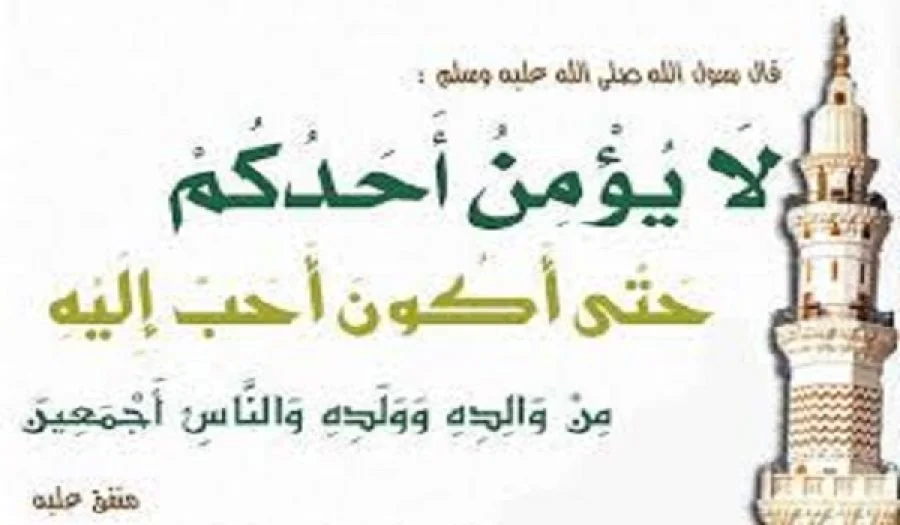
أوجب الله سبحانه على المسلمين طاعة النبيِّ e، قال الله تعالى: ﴿وَأَطِيعُوا اللَّهَ وَأَطِيعُوا الرَّسُولَ وَاحْذَرُوا فَإِنْ تَوَلَّيْتُمْ فَاعْلَمُوا أَنَّمَا عَلَى رَسُولِنَا الْبَلاغُ الْمُبِينُ﴾ فطاعة المسلم للرّسول طاعة لله ﴿مَنْ يُطِعِ الرَّسُولَ فَقَدْ أَطَاعَ اللَّهَ وَمَنْ تَوَلَّى فَمَا أَرْسَلْنَاكَ عَلَيْهِمْ حَفِيظاً﴾ هذه الطّاعة تستوجب الانقياد التّام لما أتى به الرّسول eمن قرآن وسنّة ولو خالف ذلك الهوى وصعب على النّفس، فمن يحبّ كان لمن يحبّ مطيعاً يعمل على نيل رضاه. عن أنس بن مالكٍ رضي الله عنه قال: قال رسول الله e: «لَا يُؤْمِنُ أَحَدُكُمْ حَتَّى أَكُونَ أَحَبَّ إِلَيْهِ مِنْ وَلَدِهِ وَوَالِدِهِ وَالنَّاسِ أَجْمَعِينَ». فعلى المسلم أن يتّبع ما جاء به محمّد eويعمل بما في كتاب الله وسنّة نبيّه لا يرضى بغيرهما ويحيا كما أراد له ربّه؛ عيشة يرقب من ورائها الجنّة فلا يغفل لحظة عن أحكام ربّه ولا يتجاوزها... يبحث عن الحلال فيأتيه وعن الحرام فيتجنّبه مهما كان في ذلك من صعاب ومتاعب وحتّى لا يكون في زمرة أولئك الذين يعيشون وهم عن لقاء ربّهم معرضون ﴿إِنَّ الَّذِينَ لَا يَرْجُونَ لِقَاءَنَا وَرَضُوا بِالْحَيَاةِ الدُّنْيَا وَاطْمَأَنُّوا بِهَا وَالَّذِينَ هُمْ عَنْ آيَاتِنَا غَافِلُونَ * أُولَٰئِكَ مَأْوَاهُمُ النَّارُ بِمَا كَانُوا يَكْسِبُونَ﴾.

فكيف لمسلم يقول: أحبّ الله وأحبّ رسوله e، كيف له أن يوالي أهل الكفر والعصيان ويعادي أهل الهدى والإيمان ويكون حبّه للنّاس وبغضه لهم لغير الله؟! كيف لمسلم يحبّ ربّه أن يرضى بغيره يشرّع الأحكام فيباركها وينادي بالعمل بها؟! ﴿لَّا تَجِدُ قَوْماً يُؤْمِنُونَ بِاللَّهِ وَالْيَوْمِ الْآخِرِ يُوَادُّونَ مَنْ حَادَّ اللَّهَ وَرَسُولَهُ وَلَوْ كَانُوا آبَاءَهُمْ أَوْ أَبْنَاءَهُمْ أَوْ إِخْوَانَهُمْ أَوْ عَشِيرَتَهُمْ أُولَٰئِكَ كَتَبَ فِي قُلُوبِهِمُ الْإِيمَانَ وَأَيَّدَهُم بِرُوحٍ مِّنْهُ وَيُدْخِلُهُمْ جَنَّاتٍ تَجْرِي مِن تَحْتِهَا الْأَنْهَارُ خَالِدِينَ فِيهَا رَضِيَ اللَّهُ عَنْهُمْ وَرَضُوا عَنْهُ أُولَٰئِكَ حِزْبُ اللَّهِ أَلَا إِنَّ حِزْبَ اللَّهِ هُمُ الْمُفْلِحُونَ﴾.

قد يستغرب البعض ويتساءل لماذا على المسلم أن يحبّ الرّسول ويعظّمه هذا التّعظيم الكبير؟ وقد يراود هذا السّؤال البعض من المسلمين أنفسهم في ظلّ ما شوّه عقولهم من مفاهيم فاسدة فرضتها الحضارة الغربيّة التي سادت العالم وسيطرت على بلاد المسلمين. يجيب شيخ الإسلام ابن تيمية رحمه الله: "وأمّا السبب في وجوب محبّته eوتعظيمه أكثر من أي شخص فلأنّ أعظم الخير في الدّنيا والآخرة لا يحصل لنا إلّا على يد النّبيّ e بالإيمان به واتّباعه، وذلك أنّه لا نجاة لأحد من عذاب الله، ولا وصول له إلى رحمة الله إلاّ بواسطة الرّسول؛ بالإيمان به ومحبّته وموالاته واتّباعه، وهو الذي ينجيه الله به من عذاب الدّنيا والآخرة، وهو الذي يوصله إلى خير الدّنيا والآخرة. فأعظم النّعم وأنفعها نعمة الإيمان، ولا تحصل إلّا به وهو أنصح وأنفع لكلّ أحد من نفسه وماله؛ فإنّه الذي يخرج الله به من الظّلمات إلى النّور، لا طريق له إلاّ هو، وأمّا نفسه وأهله فلا يغنون عنه من الله شيئا...". كيف لا يكون الرّسول e أحبّ للمسلم من نفسه وولده والنّاس أجمعين وهو الذي أخرجه من ظلمات الكفر إلى نور الإيمان وأنّه هو سبب بقائه البقاء الأبديّ في نعيم الجنّة السّرمديّ؟! كيف لا يحبّه هذا الحبّ العظيم وقد وهب له السّعادة التي لا مثيل لها؟!

أنْ نحبّ الله والرّسول معناه أن نطيعهما ونعمل على تنفيذ الأحكام التي جاءت في الكتاب والسّنّة ونجعلها نبراسا نهتدي ونهدي به النّاس. ننفّذها كاملة دون نقصان فلا ننتقي البعض منها ونترك الآخر أو نغيّر فيها كما تحبّ الأنفس وتهوى «لَا يُؤْمِنُ أَحَدُكُمْ حَتَّى يَكُونَ هَوَاهُ تَبَعاً لِمَا جِئْتُ بِهِ». فأنْ يحبّ المسلم والمسلمة ربّه معناه أن يطيعه ولا يعصيه في أيّ أمر ويعمل على العيش في كنف أحكامه ولا يرضى بغيرها... أن تحبّ المسلمة ربّها معناه أن تتقيّد بأحكامه ولا تترك مجالا للهوى والنّفس فيقودانها إلى ما يغضب ربّها بأن تلهث وراء صيحات الموضة وتتناسى واجب الالتزام باللّباس الشّرعي الذي فرضه الله عليها وتخرج متبرّجة عاصية له. وأن يحبّ المسلم ربّه يعني أن يلتزم بما أمره وينتهي عمّا نهاه عنه فلا تسريحات شعر حسب آخر صيحة ولا لباس على الطّراز الغربيّ... أن يحبّ المسلم والمسلمة ربّه معناه أن لا يحيا دون أحكامه ويسير في هذه الدّنيا دون هديها ويعمل بها فيرضي ربّه وينال خير جزاء. أن يحبّ المسلم ربّه معناه أن يطيعه كما أمر وكما يحبّ لا كما يحبّ هو أو كما تحدّثه به نفسه!

فأين أنت يا أمّة الإسلام من العمل بهذا؟ أين أنت من هدي نبيّك e؟ أين أنت من المكانة التي خصّك الله بها لتكوني خير أمّة أخرجت للنّاس؟ كيف لا تسيرين على خطا نبيّك e وتكونين أمّة شاكرة لربّك؟!

عَنْ عَائِشَةَ قَالَتْ: كَانَ رَسُولُ اللَّهِ eإِذَا صَلَّى قَامَ حَتَّى تَفَطَّرَ رِجْلَاهُ قَالَتْ عَائِشَةُ: يَا رَسُولَ اللَّهِ أَتَصْنَعُ هَذَا وَقَدْ غُفِرَ لَكَ مَا تَقَدَّمَ مِنْ ذَنْبِكَ وَمَا تَأَخَّرَ؟ فَقَالَ: «يَا عَائِشَةُ أَفَلَا أَكُونُ عَبْداً شَكُوراً».

فيا خير أمّة أخرجها الله لعباده، كوني أمّة شاكرة لربّك وخذي موقعك الذي اصطفاك الله له وقودي النّاس للخير ودلّيهم إليه وأعيدي مجدك وعزّك وارفعي راية دينك عاليا... وليشمّر أبناؤك عن السّواعد وليعلوا الهمم لإقامة دولة الإسلام التي بها ستكونين بإذن الله في أعلى القمم!

كتبته لإذاعة المكتب الإعلاميّ المركزيّ لحزب التّحرير

زينة الصّامت

More from null

The Absence of the State's Role in Confronting the Health Disaster: Dengue Fever and Malaria

The Absence of the State's Role in Confronting the Health Disaster

Dengue Fever and Malaria

With the widespread outbreak of dengue fever and malaria in Sudan, the features of an acute health crisis are unfolding, revealing the absence of an effective role for the Ministry of Health and the state's inability to confront an epidemic that claims lives day after day. Despite scientific and technological advances in pathology, the facts are revealed and corruption emerges.

Absence of a Clear Plan:

Despite the number of infections exceeding thousands, and mass deaths being recorded according to some media sources, the Ministry of Health has not announced a clear plan to combat the epidemic. The lack of coordination between health authorities and the absence of a proactive vision in dealing with epidemic crises are noticeable.

Collapse of Medical Supply Chains

Even the simplest medicines like "Panadol" have become scarce in some areas, reflecting a collapse in supply chains and the absence of oversight in the distribution of medicines, at a time when one needs the simplest tools of pain relief and support.

Absence of Community Awareness

There are no effective media campaigns to educate people about ways to prevent mosquitoes or recognize the symptoms of the disease, which increases the spread of infection and weakens the community's ability to protect itself.

Weak Health Infrastructure

Hospitals suffer from a severe shortage of medical personnel and equipment, even basic diagnostic tools, which makes the response to the epidemic slow and random, and endangers the lives of thousands.

How Have Other Countries Dealt with Epidemics?

Brazil:

- Launched ground and aerial spraying campaigns using modern pesticides.

- Distributed mosquito nets and activated community awareness campaigns.

- Provided medicines urgently in affected areas.

Bangladesh:

- Established temporary emergency centers in poor neighborhoods.

- Provided hotlines for reports and mobile response teams.

France:

- Activated early warning systems.

- Intensified monitoring of the transmitting mosquito and started local awareness campaigns.

Health is one of the most important duties and the state is fully responsible

Sudan still lacks effective detection and reporting mechanisms, making the real numbers much higher than announced, and increasing the complexity of the crisis. The current health crisis is a direct result of the absence of an active state role in health care that puts human life at the forefront of its priorities, a state that applies Islam and applies the saying of Omar Ibn Al-Khattab, may God be pleased with him, "If a mule stumbles in Iraq, God will ask me about it on the Day of Resurrection."

Proposed Solutions

- Establishing a health system that fears God first in human life and is effective, not subject to quotas or corruption.

- Providing free health care as a basic right for all the people. And canceling licenses for private hospitals and preventing investment in the field of medicine.

- Activating the role of prevention before treatment, through awareness campaigns and mosquito control.

- Restructuring the Ministry of Health to be responsible for people's lives, not just an administrative body.

- Adopting a political system that puts human life above economic and political interests.

- Disconnecting from criminal organizations and the drug mafia.

In the history of Muslims, hospitals were built to serve people for free, managed with high efficiency, and funded from the treasury, not from people's pockets. Health care was part of the state's responsibility, not a favor or a trade.

What is happening today in Sudan from the spread of epidemics, and the absence of the state from the scene, is a warning sign that cannot be ignored. What is required is not just providing Panadol, but establishing a real welfare state that cares about human life, and addresses the roots of the crisis, not its symptoms, a state that is aware of the value of man and his life and the purpose for which he was found, which is to worship God alone. The Islamic state is the only one capable of addressing health care issues through a health system that can only be implemented under the second righteous caliphate on the method of prophecy, which will be established soon, God willing.

﴿O you who have believed, respond to Allah and to the Messenger when he calls you to that which gives you life.﴾

Written for the Central Media Office Radio of Hizb ut-Tahrir

Hatem Al-Attar - Egypt Province

The Honor of Companionship with Abu Osama, Ahmed Baker (Hazeem), may God have mercy on him

The Honor of Companionship with Abu Osama, Ahmed Baker (Hazeem), may God have mercy on him

On the morning of the twenty-second of Rabi’ al-Awwal 1447 AH, corresponding to the fourteenth of September 2025 AD, at the age of eighty-seven, Ahmed Baker (Hazeem), one of the first generation in Hizb ut-Tahrir, passed away to his Lord. He carried the call for many years and endured long imprisonment and severe torture for its sake, but he did not falter, weaken, change, or alter, thanks to God's grace and help.

He spent long years in Syria in the eighties during the rule of the late Hafez, in hiding, until he was arrested with a group of Hizb ut-Tahrir youth by the Air Force Intelligence in 1991, to face the most severe forms of torture under the supervision of the criminals Ali Mamlouk and Jamil Hassan, where one of those who entered the interrogation room after a round of interrogation with Abu Osama and some of his comrades told me that he saw some pieces of flesh flying and blood on the walls of the interrogation room.

After more than a year in the cells of the Air Force Intelligence Branch in Mezzeh, he was transferred with the rest of his colleagues to Sednaya prison to be sentenced to ten years, of which he spent seven years patiently and expectantly, then God bestowed upon him relief.

After his release from prison, he continued to carry the call directly and continued until the arrests of the party's youth began, which included hundreds in Syria in the middle of December 1999, where his house in Beirut was raided and he was kidnapped to be transferred to the Air Force Intelligence Branch at Mezzeh Airport, to begin a new phase of terrible torture. Despite his old age, he was, with God's help, patient, steadfast, and expectant.

After nearly a year, he was transferred to Sednaya prison again, to be tried in the State Security Court, and later sentenced to ten years, of which God decreed that he spend nearly eight years, then God bestowed upon him relief.

I spent a full year with him in 2001 in Sednaya prison, but I was right next to him in the fifth dormitory (A) on the left of the third floor, I used to call him my dear uncle.

We used to eat together, sleep next to each other, and study culture and ideas. From him we gained culture and from him we learned patience and steadfastness.

He was tolerant, loved people, and was keen on the youth, instilling in them confidence in victory and the imminence of the fulfillment of God's promise.

He was a memorizer of the Book of God and he used to read it every day and night and he used to spend most of the night in prayer, and when dawn approached, he would shake me to wake me up for the night prayer and then for the dawn prayer.

I left prison and then returned to it in 2004, and we were transferred to Sednaya prison again in early 2005, to meet again with those who remained in prison when we left for the first time at the end of 2001, and among them was the dear uncle Abu Osama Ahmed Baker (Hazeem), may God have mercy on him.

We used to walk for long periods in front of the dormitories to forget with him the walls of the prison, the iron bars, and the separation from family and loved ones, how not, when he spent long years in prison and suffered what he suffered!

Despite my closeness to him and my companionship with him for long periods, I never saw him complain or grumble, as if he were not in prison, but soaring outside the walls of the prison; soaring with the Qur’an that he recites in most of his times, soaring with the wings of confidence in God’s promise and the glad tidings of His Messenger ﷺ of victory and empowerment.

We were in the darkest and most severe circumstances looking forward to the day of the great victory, the day when the glad tidings of our Messenger ﷺ are fulfilled "Then there will be a Khilafah according to the method of Prophethood." We longed to gather under the shade of the Khilafah and the banner of the Eagle fluttering. But God decreed that you move from the abode of misery to the abode of eternity and permanence.

We ask God to be in the highest Paradise and we do not purify anyone before God.

Our dear uncle, Abu Osama:

We ask God to cover you with His vast mercy, to dwell you in His spacious gardens, to make you with the righteous and the martyrs, and to reward you for the harm and torment you have suffered with the highest degrees in Paradise, and we ask Him, the Almighty, to gather us with you at the Cistern with our Messenger ﷺ and in a permanent abode of His mercy.

Our consolation is that you are arriving to the Most Merciful of the merciful, and we say only what pleases God, Indeed, we belong to God, and indeed, to Him we will return.

Written for the Media Office of Hizb ut-Tahrir

Abu Sateef Jijo