
بلوغ المرام من كتاب نظام الإسلام
(ح67) لا سبيل إلى استئناف الحياة الإسلامية إلا بالدولة الإسلامية
الحَمْدُ للهِ ذِي الطَّولِ وَالعَامْ, وَالفَضْلِ وَالإِكرَامْ, وَالرُّكْنِ الَّذِي لا يُضَامْ, وَالعِزَّةِ الَّتِي لا تُرَامْ, والصَّلاةُ وَالسَّلامُ عَلَى سَيِّدِنَا مُحَمَّدٍ خَيرِ الأنَامِ, خَاتَمِ الرُّسُلِ العِظَامْ, وَآلِهِ وَصَحْبِهِ وَأتبَاعِهِ الكِرَامْ, الَّذِينَ طَبَّقُوا نِظَامَ الإِسلامْ, وَالتَزَمُوا بِأحْكَامِهِ أيَّمَا التِزَامْ, فَاجْعَلْنَا اللَّهُمَّ مَعَهُمْ, وَاحشُرْنا فِي زُمرَتِهِمْ, وثَبِّتنَا إِلَى أنْ نَلقَاكَ يَومَ تَزِلُّ الأقدَامُ يَومَ الزِّحَامْ.
أيها المؤمنون:
السَّلامُ عَلَيكُمْ وَرَحْمَةُ اللهِ وَبَرَكَاتُهُ وَبَعدُ: نُتَابِعُ مَعَكُمْ سِلْسِلَةَ حَلْقَاتِ كِتَابِنا "بلوغ المرام من كتاب نظام الإسلام" وَمَعَ الحَلْقَةِ السَّابِعَةِ وَالسِّتينَ, وَعُنوَانُهَا: "لا سَبِيلَ إِلَى استِئنَافِ الحَيَاةِ الإِسلامِيَّةِ إِلَّا بِالدَّولَةِ الإِسلامِيَّةِ". نَتَأمَّلُ فِيهَا مَا جَاءَ فِي الصَّفحَتَينِ: السَّادِسَةِ وَالخَمسِينَ وَالسَّابِعَةِ وَالخَمسِينَ مِنْ كِتَابِ "نظَامِ الإِسلامِ" لِلعَالِمِ وَالمُفَكِّرِ السِّيَاسِيِّ الشَّيخِ تَقِيِّ الدِّينِ النَّبهَانِيِّ.
يَقُولُ رَحِمَهُ اللهُ: "غَيْرَ أَنَّهُ مُنْذُ انْتَهَتِ الحَرْبُ العالمِيَّةُ الأُولى بانْتِصَارِ الحُلَفَاءِ وأَعْلَنَ اللوردُ اللنبي قَائِدُ الحَمْلَةِ حِينَ احتَلَّ بَيْتَ المَقْدِسِ قَائِلاً: "الآنَ انْتَهَتِ الحُرُوبُ الصَلِيبيَّةُ"، مُنْذُ ذَلِكَ الحِينِ والكافِرُ المُسْتَعْمِرُ يُطَبِّقُ عَلَيْنَا نِظَامَهُ الرَأْسْمَاليَّ في جَمِيعِ شُؤُونِ الحَياةِ، حَتَّى يَجْعَلَ الانْتِصارَ الَّذِي أَحْرَزَهُ أَبَدِيَّاً. ولذَلِكَ لا بُدَّ مِنْ تَغْيِيرِ هَذَا النِظَامِ الفَاسِدِ البَالي، الَّذِي بِسَبِبِهِ يَتَمَكَّنُ الاستعمارُ مِنْ بِلادِنَا، ولا بُدَّ مِنْ قَلْعِهِ مِنْ جُذُورِهِ بِأَكْمَلِهِ جُمْلَةً وتَفْصِيلاً حَتَّى نَسْتَطِيعَ أَنْ نَسْتَأْنِفَ الحَيَاةً الإِسْلامِيَّةً. وإِنَّهُ لَمِنْ سَطْحِيَّةِ التَفْكِيرِ أَنْ نَضَعَ بَدَلَ نِظَامِنَا أَيَّ نِظَامٍ، ومِنْ ضَحَالَةِ الفِكْرِ أَنْ نَظُنَّ أَنَّ الأُمَّةَ إِذَا طَبَّقَتِ النِظَامَ وَحْدَهُ دُونَ عَقِيدَةٍ يُنْقِذُهَا، بَلْ لا بُدَّ أَنْ تَعْتَنِقَ الأُمَّةُ العَقِيدَةَ أَوَّلاً، ثُمَّ تُطَبِّقَ النِظَامَ المُنْبَثِقَ عَنْ هَذِهِ العَقِيدَةِ، وحِينَئِذ يَكُونُ تَطْبِيقُ النِظَامِ واعْتِنَاقُ العَقِيدَةِ مُنْقِذَاً. هَذَا بِالنِسْبَةِ للأُمَّةِ الَّتِي تتَكَوَّنُ عَلَى مَبْدَأٍ، وتَقُومُ دَوْلَتُهَا عَلَى هَذَا الأَسَاسِ، أَمَّا بالنِسْبَةِ لغَيْرِهَا مِنَ الشُعوبِ والأُمَمِ فلا ضَرُورَةَ لأَنْ تَعْتَنِقَ تِلْكَ الشُعوبُ والأُمَمُ المَبْدَأَ حَتَّى يُطَبَّقَ عَلَيْها، بَلِ الأُمَّةُ الَّتِي تَعْتَنِقُ المَبْدَأَ وتَحْمِلُهُ، تُطَبِّقُهُ عَلَى أَيِّ شَعْبٍ أَوْ أُمَّةٍ، ولَوْ لَمْ تَعْتَنِقِ المَبْدَأَ، لأَنَّهُ يُنْهِضُهَا أَيْضَاً، ويَجْذِبُهَا لاعْتِنَاقِهِ، ولَيْسَ اعْتِنَاقُ المَبْدَأِ شَرْطاً فِيمَنْ يُطَبَّقُ عَلَيْهِمْ، بَلِ اعْتِنَاقُ المَبْدَأِ شَرْطٌ أَسَاسِيٌّ فِيمَنْ يُطَبِّقُهُ. ومِنَ الخَطَرِ أَنْ نَأْخُذَ القَوْمِيَّةَ والنِظَامَ الاشْتِرَاكِيَّ، لأَنَّهُ لا يُؤْخَذُ مُنْفَصِلاً عَنْ فِكْرَتِهِ المَادِّيَّةِ، لأَنَّهُ لا يُنْتِجُ ولا يُؤَثِّرُ، ولا يُؤْخَذُ مُتَّصِلاً بِفِكْرَتِهِ المَادِّيَّةِ، لأَنَّهَا فِكْرَةٌ سَلْبِيَّةٌ تَتَناقضُ مَعَ فِطْرَة الإِنْسَانِ، وتَقْتَضِي أَنْ تَتْرُكَ الأُمَّةُ الإِسْلامِيَّةُ عَقِيدَةَ الإِسْلامِ. ولا يَجُوزُ أَنْ نَأْخُذَ الاشْتِرَاكِيَّةَ ونَحْتَفِظَ بالنَاحِيَةِ الرُوحِيَّةِ مِنَ الإِسْلامِ، لأَنَّنَا لا نَكُونَ أَخَذْنَا لا الإِسْلامَ ولا الاشْتِرَاكِيَّةَ، لِتَنَاقُضِهِمَا، ونَقْصِ المَأْخُوذِ مِنْهَا، ولا يَجُوزُ أَنْ نَأْخُذَ نِظَامَ الإِسْلامِ ونَتْرُكَ عَقِيدَتَهُ المُنْبَثِقَةَ عَنْهَا أَنْظِمَتُهُ، لأَنَّنَا نَكُونُ أَخَذْنَا النِظَام جامِداً لا رُوحَ فِيهِ، بَلْ لا بُدَّ مِنْ أَنْ نَأْخُذَ الإِسْلامَ كامِلاً بعَقِيدَتِهِ وأَنْظِمَتِهِ، وأَنْ نَحْمِلَ قِيَادَتَهُ الفِكْرِيَّةَ حِينَ نَحْمِلُ دَعْوَتَهُ. فسَبِيلُ نَهْضَتِنَا هُوَ سَبِيلٌ واحِدٌ، وهُوَ أَنْ نَسْتَأْنِفَ حَيَاةً إِسْلامِيَّةً. ولا سَبِيلَ إِلى اسْتِئْنَافِ حَيَاةٍ إِسْلامِيَّةٍ إِلَّا بالدَوْلَةِ الإِسْلامِيَّةِ، ولا سَبِيلَ إِلى ذَلِكَ إِلَّا إِذَا أَخَذْنَا الإِسْلامَ كامِلاً: أَخَذْنَاهُ عَقِيدَةً تَحُلُّ العُقْدَةَ الكُبْرى، وتَتَرَكَّزُ عَلَيْهَا وِجْهَةُ النَظَرِ في الحَيَاةِ، وأَنْظِمَةً تَنْبَثِقُ عَنْ هَذِهِ العَقِيدَةِ، أَسَاسُهَا كتابُ اللهِ وسُنَّةُ رَسُولِهِ، وثَرْوَتُهَا الثَقَافِيَّةُ هِيَ الثَقَافَةُ الإِسْلامِيَّةُ بِمَا فِيهَا، مِنْ فِقْهٍ، وحَدِيثٍ، وتَفْسِيرٍ، ولُغَةٍ، وغَيْرِها، ولا سَبِيلَ إِلى ذَلِكَ إِلَّا بِحَمْلِ القِيَادَةِ الفِكْرِيَّةِ الإِسْلامِيَّةِ حَمْلاً كامِلاً بالدَعْوَةِ إِلى الإِسْلامِ، وبإِيجَادِ الإِسْلامِ كامِلاً في كُلِّ مكَانٍ، حَتَّى إِذَا اِنْتَقَلَ حَمْلُ القِيَادَةِ الفِكْرِيَّةِ إِلى الأُمَّةِ بِمَجْمُوعِهَا وإِلى الدَوْلَةِ الإِسْلامِيَّةِ، قُمْنَا بِحَمْلِ القِيَادَةِ الفِكْرِيَّةِ إِلى العَالَمِ. هَذَا هُوَ السَبِيلُ الوَحيدُ لِلْنَهْضَةِ: حَمْلُ القِيَادَةِ الفِكْرِيَّةِ الإِسْلامِيَّةِ للمُسْلِمِينِ لاسْتِئْنَافِ الحَيَاةِ الإِسْلامِيَّةِ، ثُمَّ حَمْلُهَا للنَاسِ كافَّةً عَنْ طَرِيقِ الدَوْلَةِ الإِسْلامِيَّةِ".
وَنَقُولُ رَاجِينَ مِنَ اللهِ عَفْوَهُ وَمَغْفِرَتَهُ وَرِضْوَانَهُ وَجَنَّتَهُ: بَعدَ أنْ أجَابَ الشَّيخُ تَقِيُّ الدِّينِ فِي مَعرِضِ بَحثِهِ لِلقِيَادَةِ الفِكرِيَّةِ الإِسلامِيَّةِ عَنْ مَسألةٍ فِي غَايَةِ الأهَمِيَّةِ وَهِيَ: هَلْ طَبَّقَ المُسلِمُونَ الإِسلامَ, أمْ أنَّهُمْ كَانُوا يَعتَنِقُونَ عَقِيدَتَهُ وَيُطَبِّقُونَ غَيرَهُ مِنَ الأنظِمَةِ وَالأحكَامِ؟! بَعدَ أنْ أجَابَ عَنْ هَذَا السُّؤَالِ إِجَابَةً مُستَفِيضَةً استَغرَقَتْ عَشْرَ حَلْقَاتٍ. هَا هُوَ يُقَرِّرُ حَقِيقَةً ثَابِتَةً مِنْ حَقَائِقِ الإِسلامِ قَرَّرَهَا مِنْ قَبلُ رَسُولُ اللهِ rألا وَهِيَ: «أنَّ آخِرَ هَذِهِ الأُمَّةِ لا يَصلُحُ إِلَّا بِمَا صَلُحَ بِهِ أوَّلُهَا». وَقَد صَلُحَ أوَّلُهَا بِنِظَامِ الإِسلامِ الَّذِي تُطَبِّقُهُ دَولَةُ الإِسلامِ, وَأنَّهُ لا سَبِيلَ إِلَى استِئنَافِ الحَيَاةِ الإِسلامِيَّةِ إِلَّا بِالدَّولَةِ الإِسلامِيَّةِ, وَيُمكِنُ إِجْمَالُ الأفكَارِ الوَارِدَةِ فِي هَذِهِ الفَقْرَةِ بِالنُّقَاطِ الآتِيَةِ:
1) لا بُدَّ مِنْ تَغْيِيرِ النِظَامِ الرَّأسْمَالِيِّ, ولا بُدَّ مِنْ قَلْعِهِ مِنْ جُذُورِهِ, وَتَوضِيحُ ذَلِكَ كَالآتِي:
- انْتَهَتِ الحَرْبُ العالمِيَّةُ الأُولى بانْتِصَارِ الحُلَفَاءِ.
- أَعْلَنَ اللوردُ اللنبي قَائِدُ الحَمْلَةِ حِينَ احتَلَّ بَيْتَ المَقْدِسِ قَائِلاً: "الآنَ انْتَهَتِ الحُرُوبُ الصَلِيبيَّةُ".
- مُنْذُ ذَلِكَ الحِينِ والكافِرُ المُسْتَعْمِرُ يُطَبِّقُ عَلَيْنَا نِظَامَهُ الرَأْسْمَاليَّ في جَمِيعِ شُؤُونِ الحَياةِ، حَتَّى يَجْعَلَ الانْتِصارَ الَّذِي أَحْرَزَهُ أَبَدِيّاً.
- لا بُدَّ مِنْ تَغْيِيرِ النِظَامِ الرَّأسْمَالِيِّ الفَاسِدِ الَّذِي بِسَبِبِهِ يَتَمَكَّنُ الاستعمارُ مِنْ بِلادِنَا
- لا بُدَّ مِنْ قَلْعِ النِّظَامِ الرَّأسمَالِيِّ مِنْ جُذُورِهِ بِأَكْمَلِهِ جُمْلَةً وتَفْصِيلاً حَتَّى نَسْتَطِيعَ أَنْ نَسْتَأْنِفَ الحَيَاةً الإِسْلامِيَّةً.
- مِنْ سَطْحِيَّةِ التَفْكِيرِ أَنْ نَضَعَ بَدَلَ نِظَامِنَا أَيَّ نِظَامٍ.
- مِنْ ضَحَالَةِ الفِكْرِ أَنْ نَظُنَّ أَنَّ الأُمَّةَ إِذَا طَبَّقَتِ النِظَامَ وَحْدَهُ دُونَ عَقِيدَةٍ يُنْقِذُهَا.
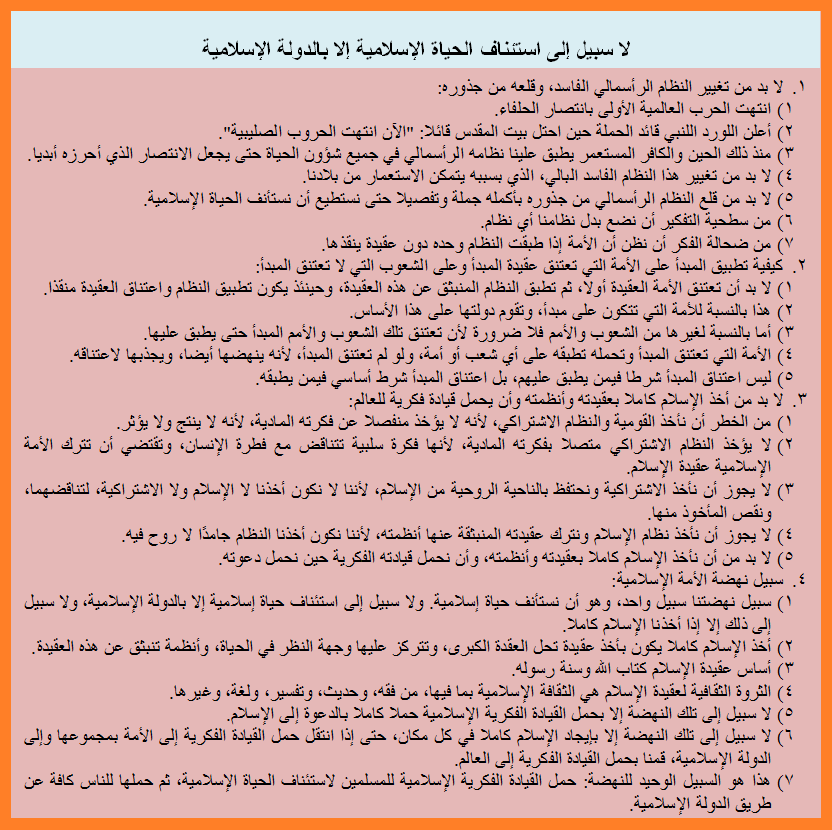
2) كيفية تطبيق مبدأ الإسلام على الأمة التي تعتنق عقيدته, وعلى الشعوب التي لا تعتنقها:
- لا بُدَّ أَنْ تَعْتَنِقَ الأُمَّةُ العَقِيدَةَ أَوَّلاً، ثُمَّ تُطَبِّقَ النِظَامَ المُنْبَثِقَ عَنْ هَذِهِ العَقِيدَةِ، وحِينَئِذ يَكُونُ تَطْبِيقُ النِظَامِ واعْتِنَاقُ العَقِيدَةِ مُنْقِذاً.
- هَذَا بِالنِسْبَةِ للأُمَّةِ الَّتِي تتَكَوَّنُ عَلَى مَبْدَأٍ، وتَقُومُ دَوْلَتُهَا عَلَى هَذَا الأَسَاسِ.
- أَمَّا بالنِسْبَةِ لغَيْرِهَا مِنَ الشُعوبِ والأُمَمِ فلا ضَرُورَةَ لأَنْ تَعْتَنِقَ تِلْكَ الشُعوبُ والأُمَمُ المَبْدَأَ حَتَّى يُطَبَّقَ عَلَيْها.
- الأُمَّةُ الَّتِي تَعْتَنِقُ المَبْدَأَ وتَحْمِلُهُ، تُطَبِّقُهُ عَلَى أَيِّ شَعْبٍ أَوْ أُمَّةٍ، ولَوْ لَمْ تَعْتَنِقِ المَبْدَأَ، لأَنَّهُ يُنْهِضُهَا أَيْضَاً، ويَجْذِبُهَا لاعْتِنَاقِهِ.
- لَيْسَ اعْتِنَاقُ المَبْدَأِ شَرْطاً فِيمَنْ يُطَبَّقُ عَلَيْهِمْ، بَلِ اعْتِنَاقُ المَبْدَأِ شَرْطٌ أَسَاسِيٌّ فِيمَنْ يُطَبِّقُهُ.
3) لا بُدَّ مِنْ أخْذِ الإِسْلامِ كامِلاً بعَقِيدَتِهِ وأَنْظِمَتِهِ، وأَنْ يُحْمَلَ قِيَادَةً فِكْرِيَّةً لِلعَالَمِ:
- مِنَ الخَطَرِ أَنْ نَأْخُذَ القَوْمِيَّةَ والنِظَامَ الاشْتِرَاكِيَّ مُنْفَصِلاً عَنْ فِكْرَتِهِ لأَنَّهُ لا يُؤْخَذُ مُنْفَصِلاً عَنْ فِكْرَتِهِ المَادِّيَّةِ، لأَنَّهُ لا يُنْتِجُ ولا يُؤَثِّرُ.
- لا يُؤْخَذُ مُتَّصِلاً بِفِكْرَتِهِ المَادِّيَّةِ، لأَنَّهَا فِكْرَةٌ سَلْبِيَّةٌ تَتَناقضُ مَعَ فِطْرَة الإِنْسَانِ، وتَقْتَضِي أَنْ تَتْرُكَ الأُمَّةُ الإِسْلامِيَّةُ عَقِيدَةَ الإِسْلامِ.
- لا يَجُوزُ أَنْ نَأْخُذَ الاشْتِرَاكِيَّةَ ونَحْتَفِظَ بالنَاحِيَةِ الرُوحِيَّةِ مِنَ الإِسْلامِ، لأَنَّنَا لا نَكُونَ أَخَذْنَا لا الإِسْلامَ ولا الاشْتِرَاكِيَّةَ، لِتَنَاقُضِهِمَا، ونَقْصِ المَأْخُوذِ مِنْهَا.
- لا يَجُوزُ أَنْ نَأْخُذَ نِظَامَ الإِسْلامِ ونَتْرُكَ عَقِيدَتَهُ المُنْبَثِقَةَ عَنْهَا أَنْظِمَتُهُ، لأَنَّنَا نَكُونُ أَخَذْنَا النِظَام جامِداً لا رُوحَ فِيهِ.
- لا بُدَّ مِنْ أَنْ نَأْخُذَ الإِسْلامَ كامِلاً بعَقِيدَتِهِ وأَنْظِمَتِهِ، وأَنْ نَحْمِلَ قِيَادَتَهُ الفِكْرِيَّةَ حِينَ نَحْمِلُ دَعْوَتَهُ.
4) سبيل نهضة الأمة الإسلامية:
- سَبِيلُ نَهْضَتِنَا هُوَ سَبِيلٌ واحِدٌ، وهُوَ أَنْ نَسْتَأْنِفَ حَيَاةً إِسْلامِيَّةً.
- لا سَبِيلَ إِلى اسْتِئْنَافِ حَيَاةٍ إِسْلامِيَّةٍ إِلَّا بالدَوْلَةِ الإِسْلامِيَّةِ, ولا سَبِيلَ إِلى ذَلِكَ إِلَّا إِذَا أَخَذْنَا الإِسْلامَ كامِلاً.
- أَخذُ الإسلام كاملا يكون بأخذ عَقِيدَةً تَحُلُّ العُقْدَةَ الكُبْرى، وتَتَرَكَّزُ عَلَيْهَا وِجْهَةُ النَظَرِ في الحَيَاةِ، وأَنْظِمَةً تَنْبَثِقُ عَنْ هَذِهِ العَقِيدَةِ، أَسَاسُهَا كتابُ اللهِ وسُنَّةُ رَسُولِهِ.
- الثَّرْوَةُ الثَّقَافِيَّةُ لِعَقِيدَةِ الإِسلامِ هِيَ الثَقَافَةُ الإِسْلامِيَّةُ بِمَا فِيهَا، مِنْ فِقْهٍ، وحَدِيثٍ، وتَفْسِيرٍ، ولُغَةٍ، وغَيْرِها.
- لا سَبِيلَ إِلَى تِلْكَ النَّهضَةِ إِلَّا بِحَمْلِ القِيَادَةِ الفِكْرِيَّةِ الإِسْلامِيَّةِ حَمْلاً كامِلاً بالدَعْوَةِ إِلى الإِسْلامِ.
- لا سَبِيلَ إِلَى تِلْكَ النَّهضَةِ إِلَّا بإِيجَادِ الإِسْلامِ كامِلاً في كُلِّ مكَانٍ، حَتَّى إِذَا اِنْتَقَلَ حَمْلُ القِيَادَةِ الفِكْرِيَّةِ إِلى الأُمَّةِ بِمَجْمُوعِهَا وإِلى الدَوْلَةِ الإِسْلامِيَّةِ، قُمْنَا بِحَمْلِ القِيَادَةِ الفِكْرِيَّةِ إِلى العَالَمِ.
- هَذَا هُوَ السَبِيلُ الوَحيدُ لِلْنَهْضَةِ: حَمْلُ القِيَادَةِ الفِكْرِيَّةِ الإِسْلامِيَّةِ للمُسْلِمِينِ لاسْتِئْنَافِ الحَيَاةِ الإِسْلامِيَّةِ، ثُمَّ حَمْلُهَا للنَاسِ كافَّةً عَنْ طَرِيقِ الدَوْلَةِ الإِسْلامِيَّةِ.
بَقِيَ أنْ نَقُول: بِهَذِهِ الحَلْقَةِ السَّابِعَةِ وَالسِّتينَ نَكُونُ قَد أنهَينَا مَوضُوعَ القِيَادَةِ الفِكرِيَّةِ فِي الإِسلامِ, وَقَد استَغرَقَ هَذَا البَحْثُ ثَمَانِيَةً وَثَلاثِينَ حَلْقَةً, نَأمَلُ أنْ نَكُونَ خِلالَهَا قَدْ أوصَلْنَا الفِكْرَةَ التِي أرَادَ الشَّيخُ تَقِيُّ الدِّينِ النَّبهَانِيُّ إِيصَالَهَا إِلَيكُمْ؛ لِيَكُونَ كِتَابِي بِحَقٍّ اسْماً عَلَى مُسَمَّىً كَمَا سَمَّيتُهُ: "بُلُوغُ المَرَامْ مِنْ كِتَابِ نِظَامِ الإِسلامْ".
أيها المؤمنون:
نَكتَفي بِهذا القَدْرِ في هَذِه الحَلْقة, وَلِلحَدِيثِ بَقِيَّةٌ, مَوعِدُنَا مَعَكُمْ في الحَلْقةِ القادِمَةِ إنْ شَاءَ اللهُ تَعَالَى, فَإِلَى ذَلِكَ الحِينِ وَإِلَى أَنْ نَلْقَاكُمْ وَدَائِماً, نَترُكُكُم في عنايةِ اللهِ وحفظِهِ وأمنِهِ, سَائِلِينَ الْمَولَى تَبَارَكَ وَتَعَالَى أَن يُعزَّنا بِالإسلام, وَأنْ يُعزَّ الإسلام بِنَا, وَأن يُكرِمَنا بِنَصرِه, وَأن يُقِرَّ أعيُننَا بِقيَامِ دَولَةِ الخِلافَةِ الرَّاشِدَةِ الثَّانِيَةِ عَلَىْ مِنْهَاْجِ النُّبُوَّةِ في القَريبِ العَاجِلِ, وَأَن يَجعَلَنا مِن جُنُودِهَا وَشُهُودِهَا وَشُهَدَائِها, إنهُ وَليُّ ذلكَ وَالقَادِرُ عَلَيهِ. نَشكُرُكُم, وَالسَّلامُ عَليكُم وَرَحمَةُ اللهِ وَبَركَاتُه.


