تأملات قرآنية (7) من دعاء المؤمنين

إخواننا الكرام, أخواتنا الكريمات: أيها المؤمنون والمؤمنات: الصائمون والصائمات:

0:00 0:00
Speed:
April 29, 2020

تأملات قرآنية (7) من دعاء المؤمنين

tam 30 4 2020

تأملات قرآنية (7)

من دعاء المؤمنين

إخواننا الكرام, أخواتنا الكريمات:

أيها المؤمنون والمؤمنات: الصائمون والصائمات:

مستمعينا الكرام  :

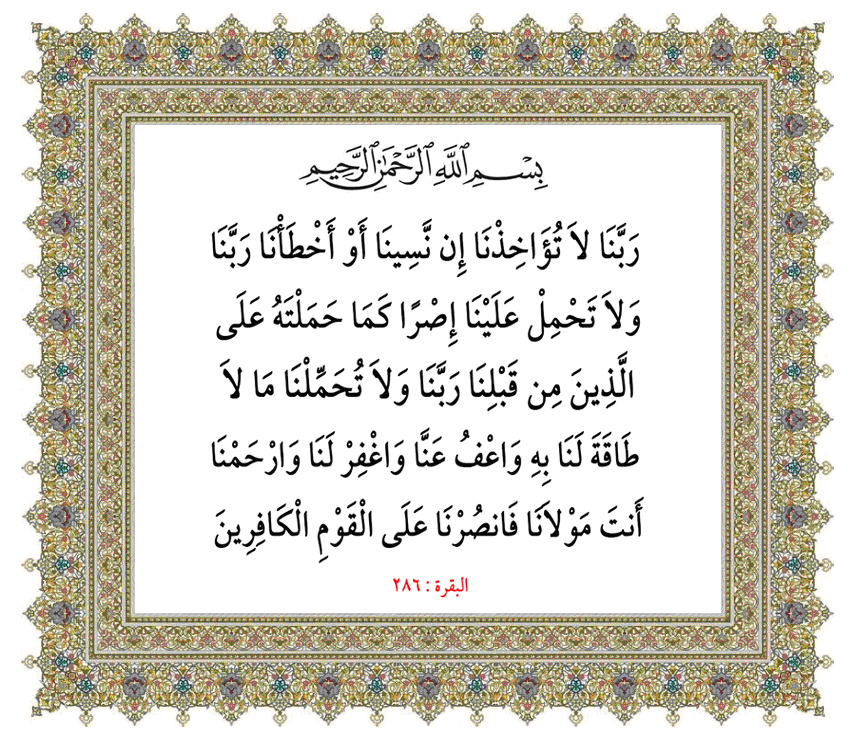
نحييكم بأطيب تحية: السلام عليكم ورحمة الله وبركاته. الحمد لله القائل في محكم كتابه وهو أصدق القائلين: (كِتَابٌ أَنزَلْنَاهُ إِلَيْكَ مُبَارَكٌ لِّيَدَّبَّرُوا آيَاتِهِ وَلِيَتَذَكَّرَ أُولُو الْأَلْبَابِ) والصلاة والسلام على رسول الله القائل: "إن الله يرفع بهذا الكتاب أقواما ويضع به آخرين". ثم أما بعد: فتعالوا معنا أحبتنا الكرام, وهلموا بنا نحن وإياكم نتجه إلى مائدة القرآن الكريم نتأمل ونتدبر آياته جل وعلا عسى أن ينفعنا ويرفعنا بما فيه من الذكر الحكيم إلى أعلى الدرجات في جنات النعيم, إنه ولي ذلك والقادر عليه. ومع الآية السادسة والثمانين بعد المائتين من سورة البقرة. يقول الله تعالى:

لما نزل قوله تعالى{وإن تبدوا ما في أنفسكم أو تخفوه يحاسبكم به الله} شق ذلك على المسلمين لما توهموا أن ما يقع في القلب من الأمور اللازمة والعارضة المستقرة وغيرها مؤاخذون به، فأخبرهم بهذه الآية أنه لا يكلف نفسا إلا وسعها أي: أمرا تسعه طاقتها، ولا يكلفها ويشق عليها، كما قال تعالى {ما جعل عليكم في الدين من حرج} فأصل الأوامر والنواهي ليست من الأمور التي تشق على النفوس، بل هي غذاء للأرواح, ودواء للأبدان، وحمية عن الضرر، فالله تعالى أمر العباد بما أمرهم به رحمة وإحسانا، ومع هذا إذا حصل بعض الأعذار التي هي مظنة المشقة حصل التخفيف والتسهيل، إما بإسقاطه عن المكلف، أو إسقاط بعضه كما في التخفيف عن المريض والمسافر وغيرهم، ثم أخبر تعالى أن لكل نفس ما كسبت من الخير، وعليها ما اكتسبت من الشر، فلا تزر وازرة وزر أخرى, ولا تذهب حسنات العبد لغيره، وفي الإتيان بـ"كسب" في الخير الدال على أن عمل الخير يحصل للإنسان بأدنى سعي منه بل بمجرد نية القلب وأتى بــ" اكتسب" في عمل الشر للدلالة على أن عمل الشر لا يكتب على الإنسان حتى يعمله ويحصل سعيه، ولما أخبر تعالى عن إيمان الرسول والمؤمنين معه وأن كل عامل سيجازى بعمله، وكان الإنسان عرضة للتقصير والخطأ والنسيان، وأخبر أنه لا يكلفنا إلا ما نطيق وتسعه قوتنا، أخبر عن دعاء المؤمنين بذلك، وقد أخبر النبي صلى الله عليه وسلم أن الله قال: قد فعلت. إجابة لهذا الدعاء، فقال {ربنا لا تؤاخذنا إن نسينا أو أخطأنا} والفرق بينهما: أن النسيان: ذهول القلب عما أمر به فيتركه نسيانا، والخطأ: أن يقصد شيئا يجوز له قصده ثم يقع فعله على ما لا يجوز له فعله: فهذان قد عفا الله عن هذه الأمة ما يقع بهما رحمة بهم وإحسانا، فعلى هذا من صلى في ثوب مغصوب، أو نجس، أو قد نسي نجاسة على بدنه، أو تكلم في الصلاة ناسيا، أو فعل مفطرا ناسيا، أو فعل محظورا من محظورات الإحرام التي ليس فيها إتلاف ناسيا، فإنه معفو عنه، وكذلك لا يحنث من فعل المحلوف عليه ناسيا، وكذلك لو أخطأ فأتلف نفسا أو مالا فليس عليه إثم، وإنما الضمان مرتب على مجرد الإتلاف، وكذلك المواضع التي تجب فيها التسمية إذا تركها الإنسان ناسيا لم يضر. {ربنا ولا تحمل علينا إصرا} أي: تكاليف مشقة {كما حملته على الذين من قبلنا} وقد فعل تعالى فإن الله خفف عن هذه الأمة في الأوامر من الطهارات وأحوال العبادات ما لم يخففه على غيرها {ربنا ولا تحملنا ما لا طاقة لنا به} وقد فعل وله الحمد {واعف عنا واغفر لنا وارحمنا} فالعفو والمغفرة يحصل بهما دفع المكاره والشرور، والرحمة يحصل بها صلاح الأمور {أنت مولانا} أي: ربنا ومليكنا وإلهنا الذي لم تزل ولايتك إيانا منذ أوجدتنا وأنشأتنا فنعمك دائرة علينا متصلة عدد الأوقات، ثم أنعمت علينا بالنعمة العظيمة والمنحة الجسيمة، وهي نعمة الإسلام التي جميع النعم تبع لها، فنسألك يا ربنا ومولانا تمام نعمتك بأن تنصرنا على القوم الكافرين، الذين كفروا بك وبرسلك، وقاوموا أهل دينك ونبذوا أمرك، فانصرنا عليهم بالحجة والبيان والسيف والسنان، بأن تمكن لنا في الأرض وتخذلهم وترزقنا الإيمان والأعمال التي يحصل بها النصر.

قال نخبة من المفسرين: "دين الله يسر لا مشقة فيه، فلا يطلب الله مِن عباده ما لا يطيقونه، فمن فعل خيراً نال خيراً، ومن فعل شرّاً نال شرّاً. ربنا لا تعاقبنا إن نسينا شيئاً مما افترضته علينا، أو أخطأنا في فِعْل شيء نهيتنا عن فعله، ربَّنا ولا تكلفنا من الأعمال الشاقة ما كلفته مَن قبلنا من العصاة عقوبة لهم، ربنا ولا تُحَمِّلْنَا ما لا نستطيعه من التكاليف والمصائب، وامح ذنوبنا، واستر عيوبنا، وأحسن إلينا، أنت مالك أمرنا ومدبره، فانصرنا على مَن جحدوا دينك وأنكروا وحدانيتك، وكذَّبوا نبيك محمدًا صلى الله عليه وسلم، واجعل العاقبة لنا عليهم في الدنيا والآخرة".

معاشر المؤمنين والمؤمنات: ادعوا الله وأنتم موقنون بالإجابة:

اللهم اجعل شهر القرآن الكريم هذا, شهر عز ونصر وتمكين للإسلام والمسلمين بقيام دولة الخلافة الثانية على منهاج النبوة, واجعلنا اللهمَّ ممَّن يتدبرون آياتك, فيأتمرون بأمرك, وينتهون عن نهيك: يستمعون القول فيتبعون أحسنه, ويقدرونك حق قدرك, ترضى عنهم, ويرضون عنك, واجعلنا اللهم ممن تقبلت منهم الصلاة والصيام, والدعاء والسجود والقيام, ومن عتقائك في هذا الشهر الكريم من النار, وأدخلنا الجنة مع الأبرار, وآخر دعوانا أن الحمد لله رب العالمين. 

More from null

Reflections on the book: "Elements of the Islamic Psyche" - Episode Fifteen

Reflections on the book: "Elements of the Islamic Psyche"

Prepared by Professor Muhammad Ahmad Al-Nadi

Episode Fifteen

Praise be to God, Lord of the Worlds, and prayers and peace be upon the Imam of the pious, the Master of the Messengers, sent as a mercy to the worlds, our master Muhammad and all his family and companions. Make us with them, and gather us in their company, by your mercy, O Most Merciful of the merciful.

Dear listeners, listeners of the Media Office Radio of Hizb ut-Tahrir:

Peace, mercy, and blessings of God be upon you. In this episode, we continue our reflections on the book: "Elements of the Islamic Psyche." In order to build the Islamic personality, with attention to the Islamic mentality and the Islamic psyche, we say, with God's help: 

O Muslims:

We said in the last episode: It is also Sunnah for a Muslim to supplicate for his brother behind his back, just as it is Sunnah for him to ask his brother to supplicate for him. It is Sunnah for him to visit him, sit with him, keep in touch with him, and share with him for the sake of God after loving him. It is recommended for a Muslim to meet his brother with what he likes to please him with that. We add in this episode and say: It is recommended for a Muslim to give gifts to his brother, according to the hadith of Abu Hurairah, which was reported by Bukhari in Al-Adab Al-Mufrad, Abu Ya'la in his Musnad, Al-Nasa'i in Al-Kuna, and Ibn Abd Al-Barr in Al-Tamhid. Al-Iraqi said: The chain of narrators is good, and Ibn Hajar said in Al-Talkhis Al-Habir: Its chain of narrators is good, he said: The Messenger of God, may God bless him and grant him peace, said: "Exchange gifts, you will love one another." 

It is also recommended for him to accept his gift and reward him for it, according to the hadith of Aisha in Bukhari, who said: "The Messenger of God, may God bless him and grant him peace, used to accept gifts and reward for them."

And the hadith of Ibn Umar in Ahmad, Abu Dawood, and Al-Nasa'i, who said: The Messenger of God, may God bless him and grant him peace, said: "Whoever seeks refuge in God, grant him refuge, and whoever asks you in the name of God, give him, and whoever seeks protection in God, protect him, and whoever does you a favor, reward him, and if you do not find anything, then supplicate for him until you know that you have rewarded him."

This is between brothers, and it has nothing to do with the gifts of the subjects to the rulers, as they are like bribery, which is forbidden. And one of the rewards is to say: May God reward you with good. 

Al-Tirmidhi narrated from Usama bin Zaid, may God be pleased with them both, and said it is good and authentic, he said: The Messenger of God, may God bless him and grant him peace, said: "Whoever has a favor done to him and says to the one who did it: "May God reward you with good," then he has exaggerated in the praise." And praise is gratitude, i.e., reward, especially from someone who finds nothing else, as Ibn Hibban narrated in his Sahih from Jabir bin Abdullah, who said: I heard the Prophet, may God bless him and grant him peace, say: "Whoever is given a favor and does not find anything better than praise for it, then he has thanked him, and whoever conceals it has disbelieved, and whoever adorns himself with falsehood is like one who wears two garments of falsehood." And with a good chain of narrators, Al-Tirmidhi narrated from Jabir bin Abdullah, who said: The Messenger of God, may God bless him and grant him peace, said: "Whoever is given a gift and finds something to repay it with, let him repay it, and if he does not find anything, let him praise it, for whoever praises it has thanked him, and whoever conceals it has disbelieved, and whoever adorns himself with what he has not been given is like one who wears two garments of falsehood." And disbelieving in the gift means concealing and covering it up. 

With an authentic chain of narrators, Abu Dawood and Al-Nasa'i narrated from Anas, who said: "The Muhajirun said, "O Messenger of God, the Ansar have taken all the reward, we have not seen a people who are better at giving a lot, nor better at consoling in a little than them, and they have spared us the burden," he said: "Do you not praise them for it and supplicate for them?" They said: "Yes," he said: "That is for that." 

A Muslim should be grateful for the little as he is grateful for the much, and be grateful to the people who do him good, as Abdullah bin Ahmad narrated in his additions with a good chain of narrators from Al-Nu'man bin Bashir, who said: The Messenger of God, may God bless him and grant him peace, said: "Whoever is not grateful for the little, is not grateful for the much, and whoever is not grateful to the people, is not grateful to God, and talking about God's blessings is gratitude, and leaving it is disbelief, and the group is mercy, and division is torment."

It is Sunnah to intercede for one's brother for a benefit of righteousness or to facilitate a difficulty, as Al-Bukhari narrated from Abu Musa, who said: "The Prophet, may God bless him and grant him peace, was sitting when a man came asking, or seeking a need, he turned his face to us and said, "Intercede, so that you may be rewarded, and God will decree on the tongue of His Prophet what He wills."

And as Muslim narrated from Ibn Umar from the Prophet, may God bless him and grant him peace, who said: "Whoever is a connection for his Muslim brother to a person of authority for a benefit of righteousness or to facilitate a difficulty, will be helped to cross the Path on the day when feet slip."

It is also recommended for a Muslim to defend the honor of his brother behind his back, as Al-Tirmidhi narrated and said this is a good hadith from Abu Al-Darda' from the Prophet, may God bless him and grant him peace, who said: "Whoever defends the honor of his brother, God will ward off the fire from his face on the Day of Resurrection." This hadith of Abu Al-Darda' was narrated by Ahmad, and he said its chain of narrators is good, and Al-Haythami said the same. 

And what Ishaq bin Rahwayh narrated from Asma bint Yazid, who said: I heard the Messenger of God, may God bless him and grant him peace, say: "Whoever defends the honor of his brother behind his back, it is a right upon God to free him from the Fire." 

Al-Quda'i narrated in Musnad al-Shihab from Anas, who said: The Messenger of God, may God bless him and grant him peace, said: "Whoever supports his brother behind his back, God will support him in this world and the hereafter." Al-Quda'i also narrated it from Imran bin Hussein with the addition: "And he is able to support him." And as Abu Dawood and Al-Bukhari narrated in Al-Adab Al-Mufrad, and Al-Zain Al-Iraqi said: Its chain of narrators is good from Abu Hurairah that the Messenger of God, may God bless him and grant him peace, said: "The believer is the mirror of the believer, and the believer is the brother of the believer, from wherever he meets him, he protects him from his loss and surrounds him from behind."

O Muslims:

You have learned from the noble Prophetic hadiths mentioned in this episode and the previous episode that it is Sunnah for whoever loves a brother for the sake of God to inform him and let him know that he loves him. It is also Sunnah for a Muslim to supplicate for his brother behind his back. It is also Sunnah for him to ask his brother to supplicate for him. It is Sunnah for him to visit him, sit with him, keep in touch with him, and share with him for the sake of God after loving him. It is recommended for a Muslim to meet his brother with what he likes to please him with that. It is recommended for a Muslim to give gifts to his brother. It is also recommended for him to accept his gift and reward him for it.

A Muslim should be grateful to the people who do him good. It is Sunnah to intercede for one's brother for a benefit of righteousness or to facilitate a difficulty. It is also recommended for him to defend the honor of his brother behind his back. So why don't we adhere to these Sharia rulings and all the rulings of Islam, so that we may be as our Lord loves and is pleased with, so that He may change what is within us, improve our conditions, and we may win the best of this world and the hereafter?! 

Dear listeners: Listeners of the Media Office Radio of Hizb ut-Tahrir: 

We will suffice with this amount in this episode, with the understanding that we will complete our reflections in the coming episodes, God willing. Until that time and until we meet you, we leave you in God's care, protection, and security. We thank you for your kind listening, and peace, mercy, and blessings of God be upon you. 

Know, O Muslims! - Episode 15
November 14, 2025

Know, O Muslims! - Episode 15

Know, O Muslims!

Episode 15

Among the assisting bodies of the Khilafah state are the ministers whom the Caliph appoints to assist him in bearing the burdens of the Khilafah and fulfilling its responsibilities. The multitude of the Khilafah's burdens, especially as the Khilafah state grows and expands, makes it difficult for the Caliph to bear them alone, so he needs someone to help him bear them to fulfill its responsibilities. However, it is not correct to call them ministers without restriction, so that the meaning of the minister in Islam, which is in the sense of an assistant, is not confused with the meaning of the minister in the current man-made systems based on democratic, capitalist, secular, or other systems that we witness in the present era.